20
Jul
Ayurvedic Treatment for IBS: Natural Support for Bloating, Constipation, Diarrhea, and Digestive Discomfort
Personalized Ayurvedic Support for IBS
IBS can be exhausting. Bloating, abdominal pain, gas, constipation, diarrhea, and food sensitivity can disrupt daily comfort and quality of life. If symptoms persist despite dietary changes or normal medical tests, Ayurveda offers a more personalized way to understand triggers, support digestion, and explore a natural approach to IBS relief.
Ayurveda looks beyond symptom control to digestion, stress, lifestyle, and the gut-brain connection. This makes it especially relevant for people seeking natural support alongside conventional IBS care.
Ayurvedic Understanding of IBS
In Ayurveda, IBS is linked to disturbed digestion, impaired Agni (digestive fire), and imbalance in the doshas—Vata, Pitta, and Kapha. When digestion is weak or irregular, symptoms such as bloating, bowel irregularity, and food sensitivity may appear.
Although Vata often plays the main role because it governs intestinal movement and the nervous system, IBS may involve one dosha or a mixed pattern.
Vata-Dominant IBS
Vata-dominant IBS often includes constipation, bloating, gas, cramping, and irregular bowel habits. Symptoms may worsen with stress, travel, irregular routines, or poor sleep.
Pitta-Dominant IBS
Pitta-dominant IBS more often presents with loose stools, urgency, burning, acidity, and sensitivity to heat or spicy foods. Stress and irritability may aggravate symptoms.
Kapha-Dominant IBS
Kapha-dominant IBS may involve sluggish digestion, heaviness, mucus in stools, slow bowel movements, and lethargy, often worsened by heavy foods and inactivity.
Many patients have a mixed pattern, which is why Ayurvedic treatment is individualized.
Ayurvedic Treatment for IBS
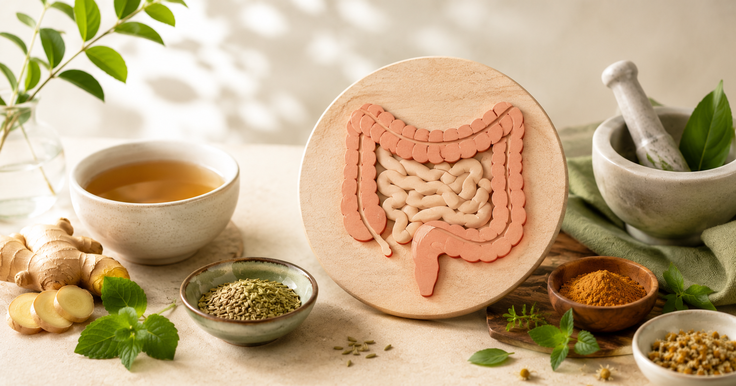
Ayurvedic treatment for IBS begins with an individualized assessment of constitution, digestive strength, lifestyle, and symptom pattern. Early treatment often focuses on improving digestion, reducing bloating, supporting bowel regularity, easing digestive discomfort, and identifying aggravating foods. Diet, routine, and digestive support are then adapted to the person’s needs.
Treatment may include Ayurvedic herbs, lifestyle changes, stress management, yoga, breathing practices, and sleep support. In suitable cases, Panchakarma therapies may also be recommended. The aim is to restore balance, improve digestive regulation, and support long-term resilience.
Potential Benefits of Ayurvedic Treatment for IBS
A personalized Ayurvedic approach may help reduce bloating, support bowel regularity, improve digestive comfort, and identify triggers that keep IBS symptoms recurring.
The Gut-Brain Connection: An Ayurvedic Perspective
Ayurveda recognizes a close relationship between the mind and the digestive system. Stress, anxiety, excessive worry, and mental overwork are often linked with digestive disturbance, which reflects what is now described as the gut-brain axis.
Sustainable improvement often comes from addressing both digestion and nervous system regulation. For many patients, emotional balance, sleep quality, and routine are key parts of digestive recovery.
Integrative Care: Ayurveda Alongside Conventional Medicine
Ayurveda can complement conventional IBS care, but medical evaluation remains important to rule out conditions such as inflammatory bowel disease, celiac disease, infection, anemia, bleeding, or unexplained weight loss before symptoms are attributed to IBS alone.
Frequently Asked Questions About Ayurvedic Treatment for IBS and Digestive Health
What is the best Ayurvedic treatment for IBS?
There is no single best treatment because IBS varies from person to person. Ayurveda tailors care to constitution, digestive strength, symptom pattern, stress, sleep, and lifestyle.
Can Ayurveda help with bloating, gas, and abdominal discomfort?
Yes. Ayurveda is often used to address bloating, gas, abdominal discomfort, and irregular digestion by improving digestive balance and reducing aggravating factors.
Can Ayurveda help IBS with constipation or diarrhea?
Yes. Constipation-predominant IBS and diarrhea-predominant IBS are approached differently in Ayurveda, with treatment adapted to the dominant pattern and its triggers.
What causes IBS according to Ayurveda?
Ayurveda sees IBS as a digestive imbalance influenced by food habits, routine, stress, sleep, and the gut-brain relationship.
How long does Ayurvedic treatment for IBS usually take?
It varies. Some patients notice early improvement within a few weeks, while more chronic patterns may need several months of consistent care.
Can Ayurveda be used alongside conventional IBS treatment?
Yes. Once serious causes are excluded, Ayurveda may add value through personalized diet, digestive support, stress reduction, and lifestyle guidance.
Are Ayurvedic herbs and Panchakarma always necessary for IBS?
Not always. Many patients first benefit from changes in meal timing, food choices, routine, and stress regulation. Herbs or Panchakarma are used only when appropriate.
Many IBS patients seek Ayurveda after ongoing bloating, abdominal pain, bowel irregularity, or food reactivity. Its value lies in identifying triggers and building a plan that complements conventional care with diet, routine, and holistic support.
If you are exploring a more personalized approach, the next step is a professional assessment of your digestive pattern, lifestyle, stress load, and overall constitution.
Ayurvedic Consultation for IBS in Nyon, Geneva, Lausanne, and Surrounding Areas
If you are living with IBS, a personalized Ayurvedic consultation can help identify the imbalances and triggers behind your symptoms. Consultations in Nyon may also be relevant for people seeking Ayurvedic support for IBS from nearby areas such as Gland, Rolle, Coppet, Prangins, Founex, Genolier, and the wider Geneva–Lausanne region.
At Vaidya Yogeet Kapoor’s Ayurvedic Clinic in Nyon, each consultation includes an assessment of digestion, constitution, diet, lifestyle, and stress factors, followed by individualized recommendations. This may be of interest to patients looking for Ayurvedic care for IBS, bloating, constipation, diarrhea, food sensitivity, and digestive imbalance in Nyon and surrounding areas.
If you want a more natural and personalized approach to IBS, booking a consultation is the next step toward clearer answers and a treatment plan tailored to you.