27
Jul
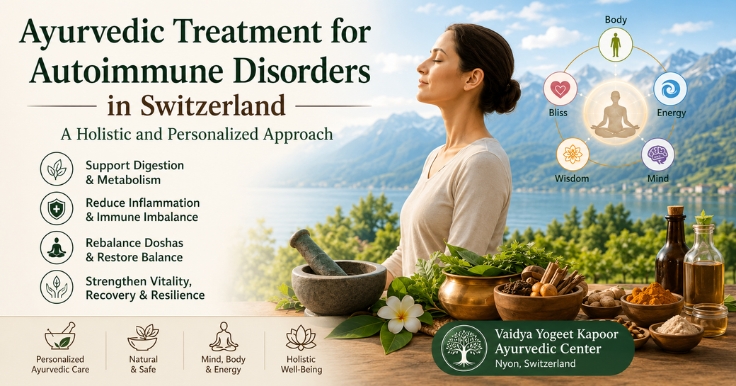
Ayurvedic Treatment for Autoimmune Disorders in Switzerland: A Holistic and Personalized Approach
Autoimmune disorders occur when the immune system reacts against the body’s own tissues. Common examples include rheumatoid arthritis, Hashimoto’s thyroiditis, psoriasis, lupus, inflammatory bowel disease, and multiple sclerosis. In Switzerland, many people are looking for a more individualized and complementary way to support long-term autoimmune imbalance. Ayurveda offers a broader perspective by considering digestion, inflammation, lifestyle, stress, and overall physiological balance.
How Ayurveda Understands Autoimmune Disorders
In Ayurveda, autoimmune conditions are often associated with several underlying imbalances: weakened digestion, metabolic overload, poor assimilation, Dosha disturbance, and reduced vitality. From this perspective, the goal is not only to ease visible symptoms, but also to restore better internal balance and more resilient overall functioning.
-
Support for digestion and metabolic efficiency
-
Reduction of inflammatory and metabolic burden
-
Rebalancing of physiological functions based on the individual profile
-
Support for vitality, recovery, and resilience
The Main Stages of Ayurvedic Care
Ayurvedic care often begins with a phase designed to stimulate digestion, improve metabolic transformation, and reduce the load of poorly processed residues. This initial stage prepares the body for a deeper and more individualized therapeutic process.
Depending on the person’s condition and needs, treatment may then include approaches with anti-inflammatory, immunomodulatory, antioxidant, adaptogenic, digestive, circulatory, remineralizing, or regenerative support. Personalization remains central: food choices, daily routines, lifestyle measures, recovery support, and, when appropriate, Ayurvedic purification and rebalancing therapies may all be part of the program.
A Global Approach: Digestion, Lifestyle, Immunity, and Inner Balance
Ayurvedic support does not focus only on physical symptoms. It also takes into account sleep quality, stress management, daily rhythm, emotional balance, and energy level. Within this framework, restorative approaches aim to nourish the tissues, support natural defenses, and improve long-term well-being.
At Vaidya Yogeet Kapoor’s Ayurvedic Center in Nyon, Switzerland, this perspective is part of a holistic model that considers physical, energetic, mental, emotional, and inner dimensions. Bioenergetic sessions may complement the process by encouraging relaxation, strengthening stress adaptation, and supporting overall balance.
Why Choose Personalized Ayurvedic Support in Switzerland
Every care plan begins with a detailed consultation that explores individual constitution, current imbalances, digestive quality, lifestyle habits, and overall health status. The aim is to build a personalized, progressive, and realistic program that can be integrated with conventional medical care when appropriate.
Frequently Asked Questions About Ayurveda and Autoimmune Disorders
Can Ayurveda support people with autoimmune disorders?
Yes. Ayurveda may help improve the overall terrain by working on digestion, inflammation, Dosha balance, lifestyle, and general vitality. Support is tailored to each person’s specific needs and condition.
Can Ayurveda cure an autoimmune disease?
Ayurveda does not promise a cure. Its role is to address deeper patterns of imbalance, improve quality of life, support immune balance, and contribute to long-term overall well-being.
How does Ayurveda explain autoimmune disorders?
According to Ayurveda, autoimmune disorders are often linked to the accumulation of Ama, weakened Agni, Dosha imbalance, tissue dysfunction, and reduced Ojas. These factors may contribute to chronic inflammation and immune dysregulation.
What is the Deepana-Pachana phase?
This is the initial stage of Ayurvedic care. Its purpose is to strengthen digestion, improve metabolism, reduce Ama, and prepare the body for more targeted therapeutic work.
Which therapeutic actions are typically emphasized in Ayurvedic support?
Depending on the individual profile, Ayurvedic support may focus on digestive support, metabolic regulation, immune modulation, reduction of inflammation, antioxidant protection, stress adaptation, circulatory support, and tissue revitalization.
What is Rasayana therapy?
Rasayana is the branch of Ayurveda dedicated to revitalization and rejuvenation. It aims to support vitality, nourish the tissues, strengthen natural defenses, and improve the body’s resilience over time.
Can Panchakarma be helpful in autoimmune conditions?
In selected cases, yes. Panchakarma may help reduce metabolic burden, rebalance the Doshas, improve metabolic function, and support the body’s natural purification processes. Its suitability depends on the individual’s condition and overall health status.
What kind of diet does Ayurveda generally recommend for autoimmune disorders?
Dietary recommendations are individualized. In general, Ayurveda favors fresh, wholesome, easy-to-digest foods that match the person’s constitution and support digestive balance while helping reduce inflammatory load.
Why is lifestyle so important in Ayurvedic support for autoimmune disorders?
Sleep, stress, movement, daily routines, emotional balance, and digestive health all influence immune function and overall well-being. In Ayurveda, lifestyle correction is considered a core part of long-term support.
What is the Panchakosha approach in Ayurveda?
The Panchakosha model describes five interconnected dimensions of the human being: the physical body, the energy body, the mental-emotional layer, deeper intelligence, and the inner state of well-being. Working across these layers supports a truly holistic approach.
How can bioenergy complement Ayurvedic care?
Bioenergetic sessions may help harmonize energetic imbalances, encourage relaxation, improve stress management, and support the body’s natural self-regulation alongside Ayurvedic care.
Can Ayurveda be combined with conventional medicine?
Yes. Ayurveda is often used as a complementary approach alongside conventional care. Any change to prescribed treatment should always be discussed with the treating physician.
Where can I receive Ayurvedic support for autoimmune disorders in Switzerland?
Vaidya Yogeet Kapoor’s Ayurvedic Center in Nyon offers personalized Ayurvedic consultations, nutritional and lifestyle guidance, Rasayana-oriented support, Panchakarma planning, and a holistic approach that may also include bioenergetic sessions.