
03
Aug
The Ayurvedic Morning Ritual That Can Transform Your Health in Just 15 Minutes
Abhyanga: The Ancient Daily Oil Massage for Better Sleep, Stress Relief, Stronger Immunity, Healthy Ageing, Hormonal Balance, and Natural Healing
“Before your body asks for medicine, offer it nourishment. Abhyanga is one of Ayurveda’s simplest and most powerful forms of preventive healthcare.”
What if one simple daily habit could reduce stress, improve sleep, nourish your joints, slow ageing, support hormonal balance, strengthen immunity, and increase your energy—all without medication?
According to Ayurveda, the world’s oldest holistic medical system, that habit is Abhyanga, the practice of daily warm oil self-massage. Far more than a relaxing massage, Abhyanga is a cornerstone of Dinacharya (Ayurvedic daily routine) and one of the most effective natural therapies for maintaining physical, mental, and emotional health.
Think about your car for a moment. You would never expect its engine to run smoothly for years without changing the oil. Yet we often expect our own bodies—far more complex than any machine—to perform every day despite stress, poor sleep, long working hours, screen time, travel, and little self-care.
Ayurveda offers a simple solution:
« Lubricate your body before life wears it out. »
What Is Abhyanga?
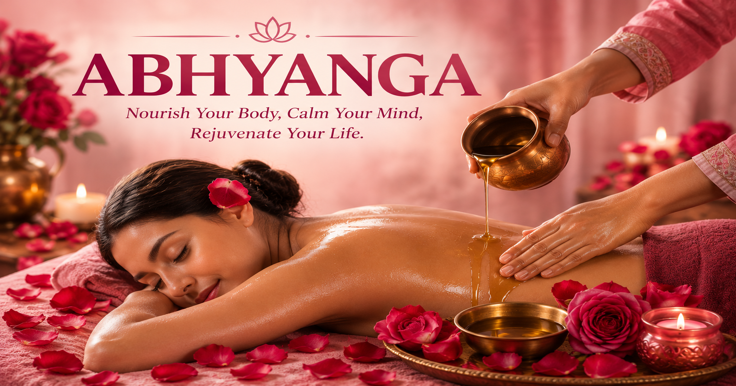
Abhyanga is a traditional Ayurvedic oil massage performed with warm herbal or natural oils before bathing. The Sanskrit word means “to anoint the body with oil,” but its purpose goes much deeper than skincare.
This daily self-care ritual nourishes the skin, muscles, joints, nerves, connective tissues, and mind while balancing primarily Vata Dosha, the Ayurvedic bioenergy that governs the nervous system, circulation, movement, sleep, and the natural ageing process.
Today, many health experts recognize chronic stress, burnout, poor sleep, anxiety, inflammation, and nervous system dysregulation as major contributors to chronic disease. Ayurveda described this imbalance thousands of years ago through the concept of aggravated Vata—and Abhyanga remains one of its most effective daily solutions.
Why Is Daily Ayurvedic Oil Massage So Powerful?
Your skin is your body’s largest organ and an active part of your immune, endocrine, and nervous systems. When warm oil is gently massaged into the skin, it stimulates thousands of nerve endings, improves circulation, supports lymphatic drainage, relaxes muscles, and activates the parasympathetic nervous system—the body’s natural “rest, repair, and regenerate” mode.
Regular Abhyanga helps counter the effects of:
- Chronic stress
- Anxiety and burnout
- Poor sleep and insomnia
- Dry skin and premature ageing
- Joint stiffness and muscle tension
- Mental fatigue and brain fog
- Hormonal imbalance
- Sedentary lifestyle
- Excessive screen time
- Frequent travel and jet lag
It is one of Ayurveda’s most effective natural preventive medicine practices.
Top Benefits of Daily Abhyanga
Sleep, Stress, and Emotional Well-Being
· Improve sleep naturally and ease insomnia
· Calm the nervous system and reduce stress
· Ease anxiety and emotional overwhelm
· Strengthen mental clarity, focus, and emotional balance
Immunity, Hormonal Balance, and Recovery
· Support hormonal balance
· Strengthen natural immunity by supporting Ojas (vital essence)
· Support recovery from physical and mental fatigue
· Increase energy levels without relying on stimulants
Circulation, Mobility, and Physical Resilience
· Improve blood circulation and lymphatic drainage
· Reduce muscle stiffness and joint discomfort
· Increase flexibility, mobility, and physical resilience
Skin Health, Healthy Ageing, and Body Awareness
· Nourish dry skin and improve elasticity
· Promote healthy ageing and longevity
· Encourage mindfulness and a deeper connection with the body
In Ayurveda, daily oil massage is considered one of the simplest ways to prevent disease rather than treat it after it appears.
Choosing the Best Oil for Abhyanga
Selecting the right oil enhances the therapeutic benefits.
Sesame Oil – Best for Vata imbalance, stress, dry skin, arthritis, joint stiffness, cold weather, and healthy ageing.
Coconut Oil – Cooling and soothing for Pitta, inflammation, sensitive skin, excess body heat, and summer.
Mustard Oil – Stimulating for Kapha, sluggish circulation, heaviness, and cold climates.
A Little Ayurvedic Wisdom
An elderly Ayurvedic physician was once asked why he still walked with the energy of a much younger man.
He smiled and replied,
“Every morning I spend fifteen minutes caring for my body. My neighbour spends fifteen minutes complaining that his body no longer cares for him.”
Health is rarely built by dramatic changes. It is built by small daily rituals practiced consistently.
The Secret Isn’t More Medicine—It’s Better Daily Habits
Abhyanga is not simply a massage—it is a daily investment in longevity, resilience, nervous system health, joint mobility, emotional well-being, healthy skin, hormonal harmony, and disease prevention.
In just 15 minutes a day, this ancient Ayurvedic ritual can help your body recover from the physical and mental demands of modern life while promoting deep relaxation, vitality, and graceful ageing. Sometimes, it begins with a pair of warm hands and a little oil.
Frequently Asked Questions (FAQs)
Is Abhyanga really beneficial every day?
Yes. Classical Ayurvedic texts recommend daily Abhyanga as part of Dinacharya because regular oil massage supports the nervous system, joints, skin, immunity, sleep, and healthy ageing.
Can Abhyanga help with stress, anxiety, and insomnia?
Absolutely. Warm oil massage activates the body’s relaxation response, helping calm the nervous system, reduce stress hormones, ease anxiety, and improve sleep quality naturally.
Which oil is best for daily Ayurvedic self-massage?
Sesame oil is considered the best all-round choice, especially for Vata imbalance. Coconut oil suits Pitta constitutions, while mustard oil benefits Kapha. Medicated Ayurvedic oils are selected according to individual health needs.
When should I perform Abhyanga?
Morning before bathing is ideal. If your goal is stress reduction or better sleep, an evening massage—especially of the scalp and feet—can also be highly effective.
Can Abhyanga help with arthritis and joint pain?
Yes. Regular Ayurvedic oil massage helps lubricate joints, reduce stiffness, improve circulation, relax muscles, and support mobility. It is commonly recommended as part of an integrative approach to joint health.
Is Abhyanga good for healthy ageing?
One of the primary goals of Abhyanga is to slow age-related degeneration by balancing Vata Dosha, nourishing body tissues, maintaining skin elasticity, and supporting long-term vitality and resilience.
Who should avoid Abhyanga?
Abhyanga should generally be avoided during acute fever, severe indigestion (Ama), active skin infections, or acute inflammatory illnesses. A qualified Ayurvedic practitioner can advise you based on your individual constitution and condition.