23
Jun
Bioenergetics with the ACMOS Method: What It Is, Benefits, Session Process, and Ayurveda Synergy
Bioenergetics with the ACMOS Method is a complementary wellness approach that explores energetic balance, stress adaptation, vitality, and whole-person well-being. This article explains what ACMOS bioenergetics is, how a session works, how it may complement Ayurveda, and what people should know before choosing this type of holistic support.
What Is Bioenergetics?
Bioenergetics is a holistic wellness approach that looks at the interaction between the physical body, emotions, mental state, and the body’s energetic regulation. In the ACMOS Method, overall well-being is linked not only to physical condition, but also to the quality, coherence, and balance of energy circulation throughout the body.
When energy flows in a balanced way, the body may be better able to adapt, recover, and maintain equilibrium. Ongoing stress, emotional shocks, fatigue, environmental stressors, lifestyle habits, and electromagnetic influences are often described as factors that can disturb this balance and gradually affect vitality.
What Is the ACMOS Bioenergetics Method?
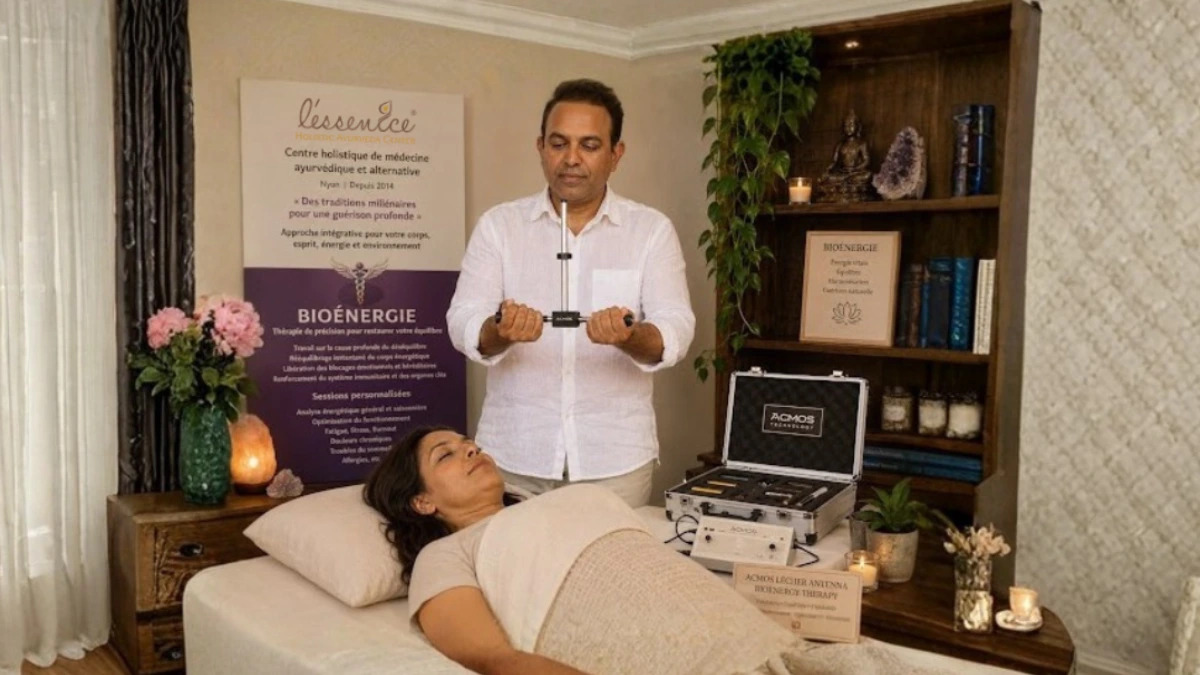
The ACMOS Method is a bioenergetic assessment and balancing approach developed from research drawing on Traditional Chinese Medicine, Ayurveda, resonance techniques, and bioenergetic measurement tools. Public descriptions of the method state that it uses the Lecher antenna as a core instrument for assessing energy fields and energetic interactions.
During an ACMOS session, practitioners use resonance-based testing to identify energetic imbalances that may influence the body’s capacity for self-regulation. The method is presented as a complementary wellness approach and not as a medical diagnosis or treatment.
The ACMOS approach considers the person as a whole, including physical, emotional, environmental, and energetic factors that may influence day-to-day well-being.
How Does an ACMOS Bioenergetic Session Work?
An ACMOS bioenergetic session usually starts with a personalised energetic assessment. Through structured measurements and resonance testing, the practitioner explores energetic fields, meridians, and regulatory patterns to identify potential imbalances
Once energetic disruptions are identified, the session may include balancing techniques, vibrational support, environmental compatibility testing, and practical recommendations related to nutrition, natural support, stress management, and lifestyle habits, depending on the individual’s needs.
The process is non-invasive and adapted to each person’s profile and goals.
What Are the Potential Benefits of Bioenergetics?
Many people choose bioenergetic balancing as a complementary wellness practice to support quality of life and overall balance. Depending on the individual, sessions may help support:
-
Vitality and energy support
-
Stress management
-
Emotional balance
-
Mental clarity and focus
-
Support during fatigue or burnout
-
Adaptation to environmental stressors
-
Recovery support after emotionally or physically demanding periods
-
General physical and emotional well-being
Responses vary from one person to another and depend on many factors, including lifestyle, overall health, stress load, and personal circumstances.
Common Reasons People Book an ACMOS Bioenergetic Session
People often seek an ACMOS bioenergetic assessment when they want complementary support for concerns such as:
-
Persistent fatigue or low energy
-
Stress and emotional overload
-
Sleep difficulties
-
Recovery after illness or a demanding life period
-
Sensitivity to environmental factors
-
A recurring feeling of imbalance
-
A proactive wellness and prevention routine
Bioenergetics can also be included in a broader wellness routine focused on prevention, resilience, and better everyday balance.
ACMOS and Ayurveda: How Bioenergetics Can Complement Ayurvedic Treatments
Ayurveda and ACMOS bioenergetics can be presented as complementary wellness approaches because both place strong emphasis on balance, individual constitution, and the body’s capacity for self-regulation. In this perspective, Ayurveda provides a holistic framework through lifestyle, nutrition, routine, herbal support, body therapies, and dosha-oriented recommendations, while ACMOS may help explore energetic patterns that could influence adaptation, vitality, and general well-being.
When used together in a complementary setting, ACMOS may support a more personalised Ayurvedic care pathway by helping identify periods of stress, energetic overload, environmental sensitivity, or reduced resilience. This can enrich an Ayurvedic wellness programme focused on restoring daily rhythm, grounding, digestive balance, recovery, and mind-body harmony.
What Supports a Synergistic Effect Between Ayurveda and ACMOS?
A synergistic effect is most often linked to consistency, personalisation, and alignment between the person’s needs and the chosen wellness practices. In a complementary approach, synergy may be supported by regular follow-up, an adapted daily routine, appropriate nutrition, rest, stress management, bodywork, breathing practices, and attention to the person’s environment. The goal is not to add many techniques at once, but to create a coherent and supportive framework in which different modalities reinforce one another.
This whole-person view is one reason many people are interested in combining ACMOS with Ayurvedic care. Together, they may be used to support well-being on several levels: physically through vitality, recovery, and resilience; mentally through clarity, focus, and reduced overload; emotionally through balance and a greater sense of inner stability; and environmentally through greater awareness of external stressors, sensitivities, and lifestyle influences.
Chakra Healing, Energetic Alignment, and Complementary Wellness
Some practitioners also integrate chakra-focused work into a broader bioenergetic or Ayurvedic wellness approach. In this context, chakra balancing is described as a complementary practice intended to support energetic alignment, emotional grounding, and a more coherent relationship between body, mind, and inner awareness. This language belongs to holistic wellness traditions and should not be understood as a medical diagnosis or treatment model.
Bioenergetics FAQ: ACMOS Method, Sessions, Ayurveda, and Whole-Person Wellness
Is the ACMOS Method a medical treatment?
No. The ACMOS Method is presented as a complementary bioenergetic approach. It does not replace medical diagnosis, treatment, or advice from a qualified healthcare professional.
Is an ACMOS session painful?
No. ACMOS assessments and balancing techniques are generally gentle and non-invasive.
How many bioenergetic sessions are usually needed?
The number of sessions depends on the person, the nature of the imbalance, and the goals of the consultation. Some people report feeling changes quickly, while others prefer ongoing support over time.
Can bioenergetics be combined with conventional medicine?
Yes. Many people use bioenergetics alongside conventional medical care and other complementary wellness practices.
Who can benefit from an ACMOS bioenergetic session?
Adults, children, older adults, and anyone looking for a holistic and personalised wellness approach may consider an ACMOS bioenergetic assessment.
Can ACMOS bioenergetics be combined with Ayurvedic treatments?
Yes. In a complementary wellness setting, ACMOS may be integrated alongside Ayurvedic recommendations such as lifestyle adjustments, nutrition, body therapies, and personalised routines. The combination is generally framed as a way to support balance and adaptation, not as a replacement for medical care.
Why do some people combine ACMOS, Ayurveda, and chakra-oriented wellness practices?
People who seek a holistic approach may appreciate combining these practices because they address daily well-being from multiple angles, including routine, stress load, energetic balance, emotional grounding, and environmental influences. Practitioners usually present this as a personalised wellness approach rather than only a medical protocol.
A personalised approach to whole-person well-being
The ACMOS Method is designed to support the body’s natural capacity for balance, adaptation, and vitality. By exploring energetic disturbances that may be associated with physical, emotional, or environmental stress, bioenergetics offers a personalised complementary approach focused on restoring harmony and supporting long-term well-being.
For readers comparing holistic approaches, ACMOS bioenergetics is most often described as a complementary wellness method focused on energetic balance, resilience, environmental sensitivity, and personalised support. Its synergy with Ayurveda is especially relevant for people seeking a broader approach to physical, mental, emotional, and lifestyle-related well-being.