WOMEN’S HEALTH & HORMONAL HEALTH
Women’s Health & an Ayurvedic Approach to Gynaecology
Ayurvedic medicine offers an individualised approach to women’s health, menstrual cycles and the different stages of reproductive life. At L’essencce, assessment considers gynaecological symptoms, menstrual patterns, digestion, metabolism, sleep, stress and each woman’s individual constitution.
This approach may complement conventional care for menstrual and gynaecological disorders, fertility, perimenopause and menopause, while respecting the need for appropriate diagnosis, examinations and prescribed medical treatment when required.
EXPERT SUPPORT
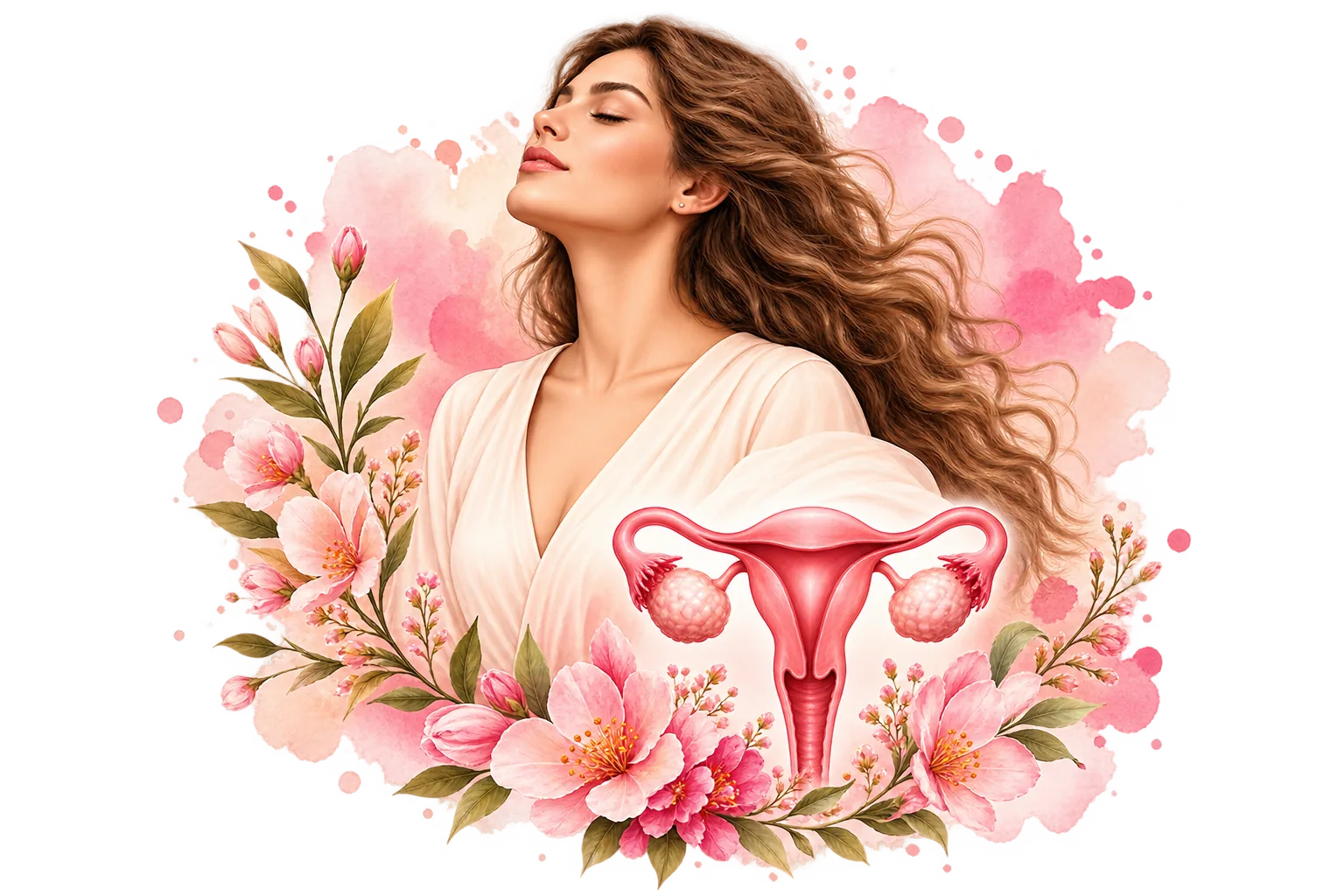
Main Gynaecological Conditions Supported
Ayurvedic medicine offers an individualised understanding of reproductive life stages, hormonal rhythms, and chronic gynaecological imbalances.
Cycles & Hormonal Health
Irregular cycles, missed periods, premenstrual symptoms and other changes in menstrual rhythm should first be understood in context before an Ayurvedic strategy is adapted.
Painful Periods
Menstrual pain or dysmenorrhoea is assessed according to intensity, location, relationship with the menstrual cycle, bleeding pattern and associated digestive or pelvic symptoms.
Endometriosis
Ayurvedic support for endometriosis is integrated alongside gynaecological follow-up and may consider pelvic pain, menstrual symptoms, digestion, energy levels and the individual constitutional pattern.
PCOS
In polycystic ovary syndrome (PCOS), assessment may focus on menstrual regularity, ovulation, metabolic health, nutrition and associated hormonal manifestations.
Fibroids & Polyps
Uterine fibroids and polyps require appropriate gynaecological evaluation. Ayurvedic care may be used as a complementary approach addressing the individual terrain, menstrual cycle and associated symptoms.
Menopause & Perimenopause
Hot flushes, disturbed sleep, fatigue, mood changes, dryness and metabolic changes may be approached individually during the transition through perimenopause and menopause.
AN AYURVEDIC PERSPECTIVE
An Ayurvedic View of Women’s Gynaecological Health
In Ayurveda, each woman is assessed according to her individual terrain. The same biomedical diagnosis may correspond to different Ayurvedic patterns, so recommendations are not determined by the disease name alone.
An Ayurvedic assessment may include Prakriti (individual constitution), Vikriti (current imbalance), Vata, Pitta and Kapha (functional Ayurvedic principles), Agni (digestive and metabolic capacity) and Apana Vata (the downward-moving function of Vata associated with the pelvic region and menstrual functions). Menstrual history, digestion, bowel function, sleep, nutrition, stress and previous medical history are also considered.
Ayurvedic Care & Protocols
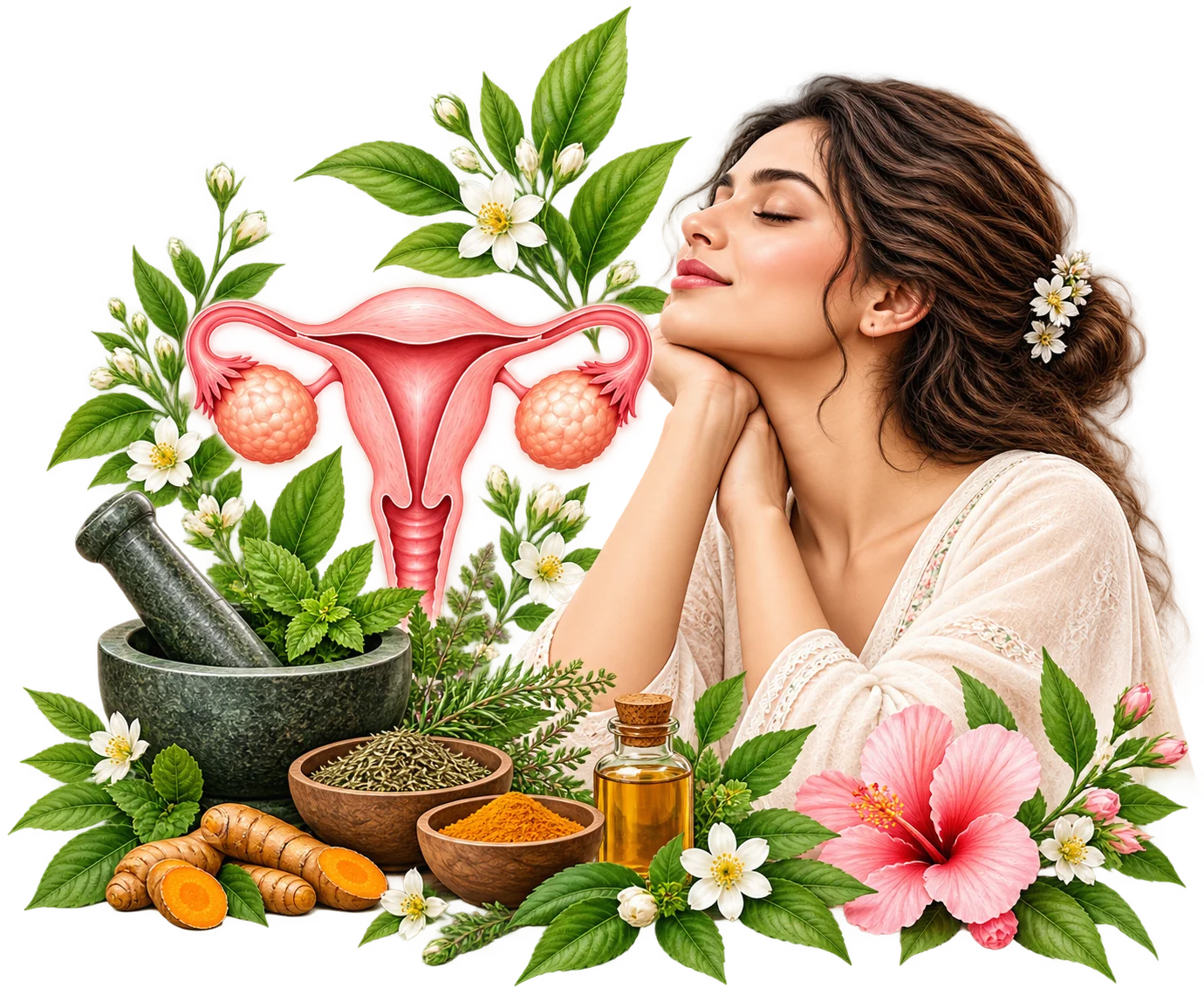
Ayurveda for Women’s Health
01
Phase
Understanding Your Constitution, Cycle & Symptoms
The consultation begins with an individual assessment of constitution (Prakriti), menstrual history, gynaecological symptoms, digestion, sleep, energy levels, lifestyle, previous health history and current medical treatments.
Book an Ayurvedic consultation in Nyon
Book an Ayurvedic consultation in Nyon
02
Phase
Balancing According to the Ayurvedic Assessment
The strategy is based on the imbalances actually observed. Vata (movement), Pitta (transformation), Kapha (structure), Agni (digestive and metabolic capacity) and Apana Vata (downward-moving Vata) may each have different relevance depending on the woman’s symptoms and constitutional pattern.
03
Phase
Nutrition, Herbal Medicine & Ayurvedic Therapies
Depending on the individual assessment, care may combine Ahara (nutrition), Vihara (lifestyle guidance), Ayurvedic herbal medicine and individually selected formulations, with recommendations adapted to the menstrual cycle, digestion, metabolism, sleep and gynaecological symptoms.
Where appropriate, therapies may include Abhyanga (Ayurvedic oil massage), Marma therapy (work on Ayurvedic vital points), Pinda Sweda (therapeutic herbal bolus application), Svedana or Nadi Svedana (general or localised therapeutic sweating), Pizhichil (continuous warm oil application) and selected forms of Basti (therapeutic Ayurvedic administration via the rectal route).
In selected situations, Raktamokshana through Jalaukavacharana (traditional therapeutic use of medicinal leeches) may also be considered. These approaches are not routine and depend on the clinical situation, individual assessment and contraindications.
Where appropriate, therapies may include Abhyanga (Ayurvedic oil massage), Marma therapy (work on Ayurvedic vital points), Pinda Sweda (therapeutic herbal bolus application), Svedana or Nadi Svedana (general or localised therapeutic sweating), Pizhichil (continuous warm oil application) and selected forms of Basti (therapeutic Ayurvedic administration via the rectal route).
In selected situations, Raktamokshana through Jalaukavacharana (traditional therapeutic use of medicinal leeches) may also be considered. These approaches are not routine and depend on the clinical situation, individual assessment and contraindications.
04
Phase
Uttara Basti
In classical Ayurveda, Uttara Basti refers to the local administration of therapeutic preparations through the genitourinary route. In gynaecological care, vaginal or intrauterine procedures are specialised and invasive and therefore require a clear indication, strict hygiene and aseptic conditions, exclusion of contraindications and an appropriate professional setting.
05
Phase
Bioenergy
Alongside Ayurvedic medicine, Bioenergy may be offered at L’essencce as a separate complementary approach aimed at energetic balancing, work on meridian pathways and stimulation of selected Marma points (vital points described in Ayurveda).
The choice of therapies always depends on the medical diagnosis, Ayurvedic assessment, constitutional terrain, menstrual cycle, symptoms, current treatments and potential contraindications.
The choice of therapies always depends on the medical diagnosis, Ayurvedic assessment, constitutional terrain, menstrual cycle, symptoms, current treatments and potential contraindications.
06
Phase
Panchakarma When Clinically Appropriate
Panchakarma (a group of classical Ayurvedic therapeutic cleansing procedures) is not automatically indicated for gynaecological conditions. Its relevance depends on the constitution, Agni, general strength, age, menstrual status, pathology, current treatments and contraindications.
07
Phase
Personalised Follow-up
Care evolves according to the menstrual cycle, symptoms and response to recommendations. Two women with the same medical diagnosis may therefore require different Ayurvedic strategies.
Ayurvedic care does not replace a gynaecological diagnosis, necessary medical investigations or prescribed treatment. It may be integrated as a complementary and individualised approach when appropriate.
Ayurvedic care does not replace a gynaecological diagnosis, necessary medical investigations or prescribed treatment. It may be integrated as a complementary and individualised approach when appropriate.
Women’s Health FAQ
Frequently Asked Questions
Which gynaecological conditions may be supported with Ayurveda?
Ayurveda may be used as a complementary approach for painful or irregular periods, PMS, amenorrhoea, endometriosis, PCOS, perimenopause and menopause, as well as other women’s health concerns after appropriate assessment.
How does Ayurveda understand menstrual disorders?
Ayurveda evaluates the menstrual cycle in relation to the individual constitution. Apana Vata, the Doshas, Agni, digestion, sleep and specific menstrual characteristics may all be considered when building an individual assessment.
Which Ayurvedic treatments may be used in gynaecological care?
Care may include Ayurvedic consultation, nutrition, lifestyle guidance, herbal medicine, Abhyanga, Marma therapy, Svedana, Pinda Sweda, Pizhichil and Basti. When appropriate, Panchakarma, hirudotherapy or other complementary approaches may also be considered.
The choice depends on the individual terrain, gynaecological condition, menstrual cycle, general health, current treatments and contraindications. There is no single Ayurvedic protocol for all women.
Is Panchakarma indicated for gynaecological conditions?
Not routinely. Panchakarma requires prior assessment of constitution, Agni, general strength, menstrual cycle, medical condition and ongoing treatments before any procedure is considered.
Can Ayurveda be combined with conventional gynaecological treatment?
Yes. Ayurveda may complement conventional care. Hormonal medication, contraception, fertility treatment or any other prescribed medication should not be stopped or changed without medical advice.
How long does Ayurvedic support usually last?
The duration depends on the condition, how long it has been present, the individual constitution and the therapeutic strategy. Care may involve consultations and lifestyle guidance alone or may include therapies and structured follow-up when appropriate.
Are Ayurvedic consultations reimbursed by supplementary health insurance in Switzerland?
Reimbursement depends on the supplementary insurance policy, recognised method, practitioner and individual contract. Patients should confirm the conditions of reimbursement directly with their insurer before treatment. See our prices & recognition page for details.

About Yogeet Kapoor
Yogeet Kapoor is a Vaidya (Ayurvedic physician, India) and a Swiss federally qualified naturopath specialising in Ayurvedic medicine.
At L’essencce in Nyon, he offers Ayurvedic consultations based on an individual assessment of constitution, symptoms and lifestyle, alongside conventional medical care when needed.
Ayurvedic Consultations for Women’s Health in Nyon
L’essencce – Centre for Ayurvedic Medicine, Naturopathy and Complementary Therapies is located in Nyon, in the heart of La Côte.
The centre welcomes patients from Nyon, Gland, Rolle, Morges, Coppet and Versoix, as well as from the wider Geneva–Lausanne and Lake Geneva region and French-speaking Switzerland. All consultations and treatments take place at L’essencce in Nyon.
L’essencce – Nyon
Book an Appointment at L’essencce
Would you like to better understand your menstrual cycle, gynaecological symptoms or hormonal changes? An initial Ayurvedic consultation can help assess your individual terrain and define a personalised complementary approach while taking your medical situation into account.
Book your first Ayurvedic consultation in Nyon